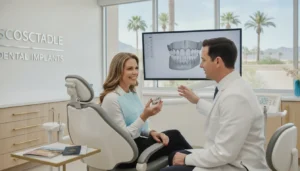

Being told you have too little upper-jaw bone for conventional implants can raise a lot of questions. Would a bone graft help? Could zygomatic implants be an option? The answer depends on more than a scan or a single measurement. Zygomatic implants anchor in the cheekbone, while grafting adds bone or a substitute to support planned implants. When considering zygomatic implants vs bone grafting, your clinician also needs to account for sinus health, your bite, the teeth you want replaced, and your medical history. Learn what distinguishes these treatments and how to prepare for a thoughtful consultation.
Key Takeaways
- Zygomatic implants and bone grafting offer different ways to address upper-jaw bone loss: One uses cheekbone support; the other builds support for conventional implants.
- The right option requires a personalized evaluation: 3D imaging, health history, sinus condition, and restoration goals all shape the recommendation.
- Plan beyond the procedure itself: Discuss risks, costs, healing, temporary teeth, follow-up, and ongoing maintenance with an experienced implant clinician.
What Are Zygomatic Implants, and How Do They Work?
Zygomatic implants are longer implants used in some cases of severe bone loss in the upper jaw. Rather than relying only on the jawbone for support, they anchor in the cheekbone. This can offer an alternative to bone grafting for some patients who need an upper-arch restoration. The right approach depends on your anatomy, health, and treatment goals, so a thorough evaluation is essential.
How They Anchor in the Cheekbone
The cheekbone, or zygoma, can provide a stable anchor when the upper jaw does not have enough bone for conventional implants. A zygomatic implant passes through the upper jaw and is secured in the cheekbone. Its length and position must be planned carefully to account for the sinuses, surrounding structures, and the teeth it will support.
Your implant clinician may use 3D imaging to assess your anatomy and plan the procedure. The position of each implant also needs to work with your bite and the design of your final restoration. Spear Education describes how zygomatic implants can support full-arch treatment when upper-jaw bone is limited.
How They Differ From Conventional Implants
Conventional implants are anchored in the jawbone. If the upper jaw has lost too much bone, a patient may need bone grafting or a sinus procedure before standard implants can be placed. Zygomatic implants use the cheekbone for support instead, which may reduce or, in some cases, avoid the need for grafting in the upper jaw.
They are not the best fit for every patient, and they are not a simpler option by default. Their placement calls for specialized planning, and factors such as cheekbone anatomy, sinus health, and the planned restoration all matter. A consultation can help you compare this approach with grafting and other options. Winterholler Dentistry provides dental implant care for patients with a range of needs, including complex cases.
When They Can Support a Full-Arch Restoration
Zygomatic implants may support a fixed bridge that replaces all the teeth in the upper arch. The bridge connects the implants, helping distribute support across the restoration. For some patients, temporary teeth can be attached on the day of surgery. This may reduce the time without fixed teeth, but it depends on the treatment plan and clinical findings.
Your clinician will assess implant stability and other factors before recommending immediate temporary teeth. Some patients may need a different schedule or additional procedures. Ask how your plan accounts for healing, your bite, temporary teeth, and the final restoration. Careful planning helps set realistic expectations for each stage of treatment.
How Does Upper-Jaw Bone Grafting Work?
Common Graft Types and Sources
Upper-jaw bone grafting adds bone or a bone substitute to an area that lacks enough volume to support a conventional dental implant. Graft material may come from the patient’s own body, a human donor, an animal source, or a synthetic material. Each has different characteristics, and the choice depends on the procedure, the patient’s health, and the treatment plan.
When bone is limited near the back of the upper jaw, a sinus lift may be an option. The clinician gently raises the sinus membrane and places graft material beneath it to create more room for implant support. A sinus lift and bone graft may be considered when the bone between the mouth and the sinus is too thin for a conventional implant. Imaging and a clinical exam help determine whether this approach fits.
How Grafts Support Implants
Graft material provides a framework for the body to build or remodel bone in an area with limited support. As healing progresses, new bone may form around and integrate with the graft. Once the site has healed enough, an implant can be placed and assessed for stability. The goal is to create a foundation that can support a crown or, in some cases, a full-arch restoration.
Grafting is one option for people with significant upper-jaw bone loss. Depending on the patient’s anatomy and goals, a clinician may also consider zygomatic implants, which anchor in the cheekbone rather than relying on grafted upper-jaw bone. This graft-free approach may suit some patients, but it is not right for everyone. A consultation should consider both the available bone and the planned teeth. Learn more about implant treatment at Winterholler Dentistry.
Why Grafts Usually Need to Heal Before Implant Placement
Many treatment plans allow the graft to heal before placing conventional implants. During this time, the body remodels the area and develops bone support around the graft material. The healing period varies with the procedure, the amount of grafting, a patient’s health, and other clinical factors. Your clinician can explain the expected timeline for your specific plan.
One overview of sinus graft treatment describes a process that may take 8 to 18 months and involve multiple visits, though timelines vary. Ask whether you will have temporary teeth during healing and when the permanent restoration may be placed. Some zygomatic implant protocols may allow temporary teeth on the day of surgery, but this depends on the case. Research comparing zygomatic implants and grafting offers background for discussing these options with an implant clinician.
Who May Qualify for Zygomatic Implants or Bone Grafting?
There isn’t one measurement or health factor that determines which treatment is right. An implant clinician considers the amount and location of available bone, cheekbone and sinus health, your medical history, and the restoration you need. A clinical exam and 3D imaging can help identify suitable options, along with their risks and limitations.
Amount, Quality, and Location of Upper-Jaw Bone
Traditional implants need enough healthy jawbone for support. If bone has thinned or been lost, often after tooth loss or long-term denture use, bone grafting may help rebuild the area. Grafting can be especially relevant toward the back of the upper jaw, where the sinus can limit the space available for implants.
When bone loss is severe, a clinician may consider zygomatic implants. These longer implants anchor in the cheekbone rather than relying on weakened upper-jaw bone, and may avoid grafting in some cases. The Spear Education overview describes how clinicians consider remaining bone and restoration needs when comparing these approaches. Imaging helps determine what may be possible for your anatomy.
Cheekbone Anatomy, Sinus Health, and Soft Tissue
Zygomatic implants depend on the cheekbone for support, so its shape and available bone are important. A clinician will also assess the sinuses and the soft tissue around the planned restoration. Sinus symptoms or other concerns may need attention before surgery. The Burbank Dental Implants comparison discusses why sinus health is part of planning for treatment in the upper jaw.
Soft tissue health and access for cleaning matter, too, particularly with a full-arch restoration. These factors can influence implant placement and the design of the replacement teeth. Your evaluation may show that one approach is appropriate, that another is more suitable, or that a concern should be addressed before implant treatment.
Overall Health, Past Procedures, Bite, and Restoration Goals
Your medical history, medications, and healing capacity all help shape a treatment plan. Previous grafts or implants can affect the available bone and influence where new implants may be placed. Your bite and the number of teeth being replaced also matter: planning for one missing tooth differs from planning for a full arch.
Think about your priorities and timeline as well. You may be considering treatment in stages or exploring a full-arch restoration. The Winterholler Dentistry implant team provides care for a range of implant needs, including complex cases. During a consultation, ask which options fit your anatomy, what the process may involve, and what alternatives are available. Only an individual clinical evaluation can determine whether you qualify for a specific procedure.
How Do Zygomatic Implants and Bone Grafting Compare?
Zygomatic implants and bone grafting can both help some people with severe upper-jaw bone loss receive implant-supported teeth, but they address the problem in different ways. Zygomatic implants anchor in the cheekbone, while a graft adds bone or bone substitute to the jaw to create support for conventional implants. In some treatment plans, grafting may be avoided; in others, it may be the more appropriate option.
There is no single best choice for everyone. The amount and location of remaining bone, sinus health, overall health, the number of teeth being replaced, and your goals all matter. A 3D scan and clinical examination help an implant dentist assess your anatomy and discuss possible treatment paths. You can learn more about dental implant treatment at Winterholler Dentistry, including options for complex cases.
It also helps to compare more than the surgery itself. Ask about the proposed restoration, treatment stages, recovery, possible complications, cost, and follow-up needs. A plan that reduces the number of procedures may still involve a more complex surgery, while a grafting plan may require additional healing time before implant placement. Understanding the trade-offs can help you discuss realistic expectations with your clinician.
How Zygomatic Implants Can Help—and Their Limits
Zygomatic implants are longer than conventional implants and anchor in the cheekbone, which can provide support when the upper jaw does not have enough bone for standard implants. For some people who need a full-arch restoration, this approach may avoid grafting the upper jaw first and may reduce the number of surgical stages.
That does not make zygomatic implants the right choice for every patient. Their placement requires careful planning and experience with the anatomy around the cheekbone and sinuses. A clinician must assess your bone, health history, and restoration goals before recommending treatment. Spear Education’s comparison describes how zygomatic implants may serve as an option for people with severe upper-jaw bone loss. Your examination and imaging will determine whether that option is suitable for you.
How Bone Grafting Can Help—and Its Limits
Bone grafting adds bone or a bone substitute to an area that needs more support. In the upper jaw, a sinus lift may create room for conventional implants by placing graft material near the sinus. After the graft heals, your clinician can evaluate whether the site is ready for implant placement.
A graft may make a conventional implant plan possible, but it can add treatment stages and healing time. The timeline depends on the graft’s size and location, your health, and how your body heals. Some people may need several months before implants can be placed, while others may follow a different schedule. A sinus lift and bone graft may be one part of a staged treatment plan. Ask your implant dentist what healing milestones they will check before moving to the next step.
Surgical Risks and Possible Complications
Both options involve surgery, so ask your clinician to explain the potential risks before treatment. Swelling, bruising, discomfort, infection, or delayed healing can occur after oral surgery. A graft may not heal as planned, and an implant may fail to integrate with bone or develop problems later. Individual risks can vary with health conditions, medications, smoking, oral hygiene, and the complexity of the procedure.
Zygomatic implant placement calls for precise planning because of the implant’s position near the cheekbone and sinus area. Grafting has different considerations, including the graft site and, for a sinus lift, sinus health. Your clinician should discuss how they plan to manage these risks, what signs to watch for after surgery, and when to contact the office. Spear Education outlines considerations for zygomatic implant treatment, including the need for specialized planning and experience.
Cost, Number of Procedures, and Practical Considerations
Treatment costs vary with the number of implants, the type of restoration, whether grafting or other procedures are needed, and the follow-up care involved. Rather than relying on a general estimate, ask for an itemized treatment plan. Check what the estimate includes, whether additional procedures could change the cost, and what payment or financing options are available.
A grafting plan may require multiple appointments and a healing period before conventional implants can be placed. Zygomatic implants may reduce the number of surgical stages for some patients, but the procedure is more complex and requires appropriate expertise. Also consider travel, time away from work, and follow-up visits, particularly if you are coming to Arizona for care. Ask your clinician to compare the expected schedule for each option and explain which appointments may need to happen in person. These practical details can help you plan treatment around your daily responsibilities.
Misconceptions About Candidacy, Complexity, and Durability
Severe bone loss does not automatically mean zygomatic implants are necessary, and grafting is not always the preferred way to support conventional implants. The recommendation depends on where bone is missing, the amount and quality of remaining bone, sinus health, the teeth being replaced, and your treatment goals. Some patients may have more than one possible approach; others may have a clearer recommendation after imaging and an examination.
It is also inaccurate to assume one option is always simpler or lasts longer. Zygomatic implants may shorten the route to replacement teeth for selected patients, while grafting may support a conventional implant plan. Long-term outcomes with either approach depend on treatment planning, surgical care, the final restoration, and ongoing maintenance. A clinician experienced in complex implant cases, such as Dr. Chris Winterholler, can review the benefits, limitations, and alternatives for your specific situation.
How Long Do Treatment and Recovery Take?
The timeline depends on your anatomy, the treatment plan, and how your body heals. Bone grafting often involves a healing period before implants can be placed. Zygomatic implants may let some patients receive fixed temporary teeth on the day of surgery, but immediate teeth aren’t right for everyone. Your implant clinician can outline the likely schedule after reviewing your imaging and goals.
Staged Grafting and Implant Placement
When the upper jaw lacks enough bone for conventional implants, a sinus lift or another grafting procedure may add support. The graft needs time to heal before implants are placed, so treatment typically involves multiple visits and stages. One overview of sinus lifts and zygomatic implants describes a timeline of 8 to 18 months for grafting followed by implant placement. Your schedule may be shorter or longer based on the procedure, healing, and treatment plan. Fixed teeth on the day of graft surgery aren’t usually part of this process. Ask what you’ll use for teeth between stages and how your care team will determine when the graft is ready.
Zygomatic Implant Placement and Temporary Teeth
Zygomatic implants are longer than conventional implants and anchor in the cheekbone. For some patients with significant upper-jaw bone loss, they can provide support for a full-arch restoration without waiting for a bone graft to heal. In suitable cases, fixed temporary teeth may be attached on the day of surgery. That timing isn’t guaranteed: it depends on your anatomy, implant stability, and the planned restoration. Temporary teeth also need careful use while the implants heal, and the final restoration may come later. Ask your clinician whether same-day fixed teeth are realistic for you, and what foods or activities you may need to avoid. Learn more about full-arch implant treatment and the options your care team may consider.
Discomfort, Swelling, Follow-Up, and Daily Activities
Plan for some recovery after either procedure. Swelling, bruising, and discomfort can occur, though the amount and duration vary from person to person. Your clinician will explain what to expect and provide instructions for medication, eating, oral care, and activity. If you receive IV sedation, arrange for someone to take you home and follow your team’s directions for the rest of the day. Medication, including antibiotics, may be recommended based on your individual needs. Keep follow-up visits so your care team can check healing and answer questions. Before surgery, ask when you can return to work, exercise, and your usual diet. Contact the dental team if symptoms concern you or worsen.
Planning Appointments and Recovery When Traveling for Care
If you’re traveling for treatment, arrange your trip around the consultation, procedure, and follow-up visits. Don’t assume every step can happen in one appointment: imaging, health-history review, healing, and the restoration plan all affect timing. Ask how long you should stay near the practice after surgery, which visits need to be in person, and how your team will check in once you’re home. It also helps to know whom to contact with recovery questions and whether a local dentist can assist with routine care. The choice between grafting and zygomatic implants depends on more than speed. Clinical guidance on full-arch treatment planning discusses factors such as bone, restoration support, treatment time, cost, and clinician experience.
What Can Patients Expect Long Term?
Zygomatic implants and bone grafting can both support a full-arch restoration, but neither guarantees a particular outcome or removes the need for ongoing care. Your long-term outlook depends on your anatomy, health, treatment plan, and daily maintenance.
What Success Rates Can—and Can’t—Tell You
Success rates describe results across groups of patients, not what one person can expect. One source reports success rates above 95% for traditional implants in many cases and describes zygomatic implant success as high, particularly when an experienced surgeon places them. These figures may reflect different patient groups, definitions of success, and follow-up periods, so they are not a direct comparison. The overview of traditional and zygomatic implants offers additional context.
It also helps to distinguish the implant’s stability from the lifespan of the teeth attached to it. An implant may remain stable while its full-arch prosthesis needs repair or replacement. Ask your clinician which outcomes they track and how those results relate to your health, anatomy, and planned restoration.
Factors That Affect Implant and Graft Longevity
The amount, quality, and location of available bone help determine whether grafting, zygomatic implants, or another approach may suit you. Zygomatic implants can be considered when there is severe upper-jaw bone loss, as they anchor in the cheekbone and may avoid sinus grafting. Bone grafting adds support where conventional implants are planned. The right choice depends on your anatomy and goals, as described in this comparison of zygomatic implants and bone grafting.
Your overall health and habits also matter. Smoking, poorly controlled diabetes, gum disease, teeth grinding, and difficulty cleaning around a restoration can affect healing or add stress to implants. A health review and 3D imaging help the clinician assess risks and plan treatment. Neither option is automatically more durable for everyone, and a graft does not guarantee implant success.
Hygiene, Maintenance, and Ongoing Monitoring
Implant-supported teeth need daily cleaning, even though the implants themselves cannot develop cavities. Brush twice a day and clean around and beneath the restoration as your dental team recommends. Depending on your restoration and dexterity, tools such as interdental brushes, floss threaders, or a water flosser may help.
Regular professional visits allow your clinician to check the implants, gums, bite, and prosthesis, and address changes early. Contact your dental team if you notice persistent swelling, bleeding, pain, looseness, or a change in how your teeth fit together. Careful planning and follow-up are important with either treatment. Learn more about Winterholler Dentistry’s dental implant care, including options for complex implant cases.
How Does an Experienced Implant Clinician Evaluate Your Options?
A careful evaluation brings together your anatomy, health, and goals for your replacement teeth. Your clinician can use this information to compare zygomatic implants with bone grafting and explain which approaches may be suitable for your situation.
Use 3D Imaging to Assess the Upper Jaw, Sinuses, and Cheekbone
Choosing between zygomatic implants and bone grafting starts with a close look at your anatomy. A clinician may use 3D imaging, such as a cone beam CT scan, to assess the amount and quality of bone in your upper jaw, the position of your sinuses, and whether your cheekbone may provide support for implants. This imaging can show details that are difficult to assess on a standard dental X-ray.
The scan is one part of the evaluation, not a treatment decision on its own. Your exam, symptoms, dental history, and goals also matter. Both procedures require careful planning and surgical experience, as Crestline Dental Implant Center explains.
Plan Around the Final Full-Arch Restoration
Implants need to support the replacement teeth, so the treatment plan should account for the final restoration from the start. The clinician considers how many teeth need replacing, where the teeth should sit, how your bite functions, and how implant placement can provide stable support. These factors help the team assess whether grafted bone may support conventional implants or whether zygomatic implants could be considered.
The plan should also reflect healing time, appointments, cost, and follow-up needs. A surgeon and restorative dentist may coordinate the implant positions with the design of your teeth. Spear Education’s overview describes factors clinicians may weigh when comparing these options for full-arch treatment.
Review Health History, Risks, and Alternatives
Your medical and dental history helps the clinician understand what precautions or additional evaluations may be needed. Be prepared to discuss medications, health conditions, previous implant or sinus procedures, smoking, and any history of treatment complications. Your clinician may also ask about sinus symptoms and your preferred timeline for receiving replacement teeth.
Neither zygomatic implants nor bone grafting suits every patient. The decision may depend on your bone levels, sinus health, how many teeth need replacing, and whether you can allow time for graft healing. Ask about the benefits, risks, alternatives, and next steps if the initial plan needs to change. This comparison of zygomatic implants and sinus lift grafting can help you prepare questions, but an in-person assessment is needed to discuss your specific options.
Why Experience With Complex Implant Cases Matters
Zygomatic implants anchor in the cheekbone, so treatment calls for detailed imaging and careful surgical planning. Bone grafting also involves important decisions, including where to place the graft and when the area may be ready for implants. Ask how often your clinician performs the procedure being recommended, how the surgical and restorative teams coordinate care, and how they would address complications or revise an existing treatment.
Experience is an important consideration, but it should accompany a personalized evaluation and a clear explanation of your options. Dr. Chris Winterholler’s practice profile notes that he has placed more than 16,000 implants and completed over 3,000 full arches. Read more about his background on the Meet Dr. Winterholler page and explore the practice’s dental implant services.
What Should You Ask at an Implant Consultation?
A consultation should help you understand your options and feel confident about the next steps. Bring a list of questions, and ask the clinician to explain how your anatomy, health, and goals shape the treatment plan. If you’re comparing zygomatic implants with bone grafting, discuss the reasoning behind each approach, the likely timeline, and what alternatives may be available.
Which Option Fits My Anatomy, and Why?
Ask what your 3D imaging shows about the amount and quality of bone in your upper jaw, and whether your sinuses or cheekbone affect your options. Zygomatic implants may be considered when there is severe bone loss in the upper jaw. Bone grafting may help create support for conventional implants. The right approach depends on your anatomy, health, and goals, so ask why the clinician recommends one option over another.
Find out whether the plan is based on your final teeth and bite, and ask what alternatives are available. Spear Education’s overview of zygomatic implants and bone grafting explains why treatment planning should involve the patient. Winterholler Dentistry’s implant care options include treatment for complex cases.
What Timeline, Recovery, and Follow-Up Should I Expect?
Ask how many procedures and appointments your treatment may involve, when you might receive temporary teeth, and how long healing could take before your final restoration. Timelines vary. Bone grafting often requires a healing period before implants can be placed, while some zygomatic implant cases may allow temporary teeth on the day of surgery. Ask what factors could affect your plan.
Discuss expected swelling or discomfort, changes to your diet, time away from work, and when you may return to normal activities. If you’re traveling for care, ask how long to stay nearby and how follow-up visits will be arranged. Request a written schedule that includes checkups and ongoing maintenance. Spear Education’s comparison offers helpful context on why these treatment timelines can differ.
What Are the Risks, Costs, and Backup Plans?
Ask which risks apply to your health and proposed treatment, how possible complications would be managed, and what symptoms should prompt a call to the office. Request an itemized cost estimate, and check whether it includes imaging, surgery, temporary teeth, the final restoration, and follow-up care. Ask how additional treatment could affect the total cost or timeline.
Discuss alternatives in case the planned procedure isn’t suitable or doesn’t heal as expected. A clear plan should explain the benefits and limitations of each option, as well as who will plan and perform each part of treatment. For complex care, ask about the clinician’s experience with similar cases. You can read about Dr. Chris Winterholler’s implant experience and bring any questions about your specific treatment plan to your consultation.
Frequently Asked Questions
Are zygomatic implants better than bone grafting?
Neither option is best for everyone. Zygomatic implants use the cheekbone for support, while grafting adds material to the upper jaw to help support conventional implants. Your anatomy, health, and restoration goals help determine which approach may be appropriate.
Does severe upper-jaw bone loss mean I need zygomatic implants?
Not necessarily. Bone grafting or another treatment may still be an option. A clinical exam and 3D imaging can help your implant clinician assess the available bone, sinus health, and cheekbone anatomy before discussing a plan.
Can I get fixed teeth on the day of zygomatic implant surgery?
Some patients may receive temporary fixed teeth on surgery day, but this depends on factors such as implant stability and the planned restoration. Ask your clinician whether this may be suitable for your case and what to expect if it isn’t.
How long does treatment take?
The timeline varies. Grafting often requires a healing period before conventional implants can be placed. Some zygomatic implant plans may involve fewer surgical stages, but recovery and restoration timing still depend on your clinical findings.
What should I ask when choosing an implant clinician?
Ask about the clinician’s experience with the recommended procedure and similar complex cases, how the final restoration will be planned, and what follow-up care involves. You can learn about Dr. Chris Winterholler’s implant experience on the practice website.