
A fixed All-on-4 or W-4 arch can look and feel like a complete set of teeth, but the space beneath the bridge still needs deliberate care. If you are still comparing treatment, start with what All-on-4 dental implants are at Winterholler, then use this guide for daily cleaning. Cleaning also changes as your mouth heals and your provisional restoration is replaced by the final arch.
Book your consultation if you want the Winterholler team to walk through your All-on-4 cleaning plan.
For how to clean all on 4 dental implants, follow your treating team’s instructions first. Winterholler’s published guidance says to brush the provisional with a soft-bristle toothbrush 2 to 3 times daily, then wait 4 weeks after surgery before starting a Waterpik. The office advises patients on using it between the gums and the W-4. Long-term, the practice recommends professional cleanings every 3 months and annual X-rays to monitor bone and implant health.
Those dates matter because surgery-day teeth, when used, are fixed provisional teeth while healing continues, not necessarily the final zirconia restoration. Your cleaning approach should therefore match the stage of treatment, the fit of the bridge, and the instructions given for your case. Understanding what lies beneath a fixed arch is the starting point for cleaning it safely and thoroughly.
What Changes When You Clean a Fixed Arch
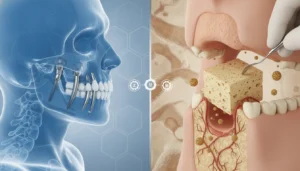
A fixed All-on-4 or W-4 arch is secured to implants and stays in your mouth. It cannot be removed and rinsed in your hand like a denture. It also is not cleaned exactly like a row of natural teeth. The full-arch bridge replaces the visible teeth, but there is still a gumline and a space where the prosthesis meets the tissues. Small amounts of food and plaque can collect in that area, beneath the bridge, and around the implant-supported structure.
That is why cleaning has to reach more than the outer surfaces. Brush the arch with a soft-bristle toothbrush two to three times a day, giving attention to the teeth, the gumline, and the contours underneath the bridge. The practice notes that plaque can build up on a provisional appliance just as it can on natural teeth. Your cleaning routine should be thorough without forcing an instrument into the tissues. If your care team has shown you how to use a Waterpik, follow that instruction for the area between the gums and the W-4. The practice recommends beginning Waterpik use four weeks after surgery, not before, and advises patients on proper use.
Planning and follow-up also matter because a full arch is supported by more than the visible restoration. A W-4 generally uses four to six implants. Bone needs time to hold the posts through a process called osseointegration, which the American Dental Association explains can take up to several months. Careful home cleaning helps protect the gums around those implants while healing progresses. Dr. Chris Winterholler plans implant treatment and evaluates healing, bite, and the appearance of the restoration as care continues.
When teeth are placed on the day of surgery, they are provisional. The final zirconia arch comes later, after the healing period. The daily principle remains the same for both: clean the visible teeth and the gumline, and reach the area beneath the fixed bridge as instructed. The materials and contours may change, but plaque still gathers where the restoration meets the gums. For more detail about the design and stages of this type of restoration, see the W-4 full-arch bridge information from the practice.
How to Clean All on 4 Dental Implants Each Day
Cleaning All-on-4 dental implants is a daily habit, but the timing and pressure should change as your mouth heals. Your provisional teeth can collect plaque much like natural teeth, so gentle, consistent care matters from the beginning. Use the practice’s post-op instructions as your primary guide, especially during the first month.
-
Follow the early healing instructions. During the first 24 hours, do not aggressively rinse or swish. On the second day, light brushing and rinsing are appropriate, while taking care around the healing tissue. Use a soft-bristle toothbrush and avoid scrubbing the surgical areas. If your own care instructions differ, contact your implant office before changing your routine.
-
Brush the provisional two to three times a day. Once brushing is allowed, use a soft-bristle toothbrush to clean the visible surfaces of the provisional teeth. Spend time along the edge where the provisional meets your gums, using gentle strokes rather than forceful pressure. This area can hold plaque, and cleaning it regularly helps support a healthier healing environment.
-
Resume normal brushing during weeks two through four. Winterholler’s published instructions advise resuming normal brushing and rinsing during this period. “Normal” does not mean aggressive: continue to use a technique that is comfortable and appropriate for your healing tissues. Keep your required follow-up appointment so the team can assess your progress and address areas that are difficult to clean.
-
Wait four weeks before using a Waterpik. Do not start a Waterpik before four weeks after surgery unless your treating clinician specifically gives you different instructions. After that point, use it to clean between the gums and the W-4 in the manner the office demonstrates. The correct angle and pressure depend on your healing and restoration, so ask the team to review your technique rather than guessing.
-
Add other tools only when they fit your care plan. A floss threader or proxy brush is a common extra tool that some dentists recommend for specific spaces. Winterholler’s published steps center on the soft-bristle brush and the timed Waterpik, so follow the instructions you were given instead of adding products or techniques on your own.
The provisional is generally worn for about three to six months while Dr. Chris Winterholler checks healing, bite, and appearance. Keep reporting discomfort, bleeding, or a bite that feels wrong so the clinician can evaluate it rather than trying to correct the problem through cleaning alone.
Waterpik Timing and What to Skip
Timing matters when you are learning how to clean all on 4 dental implants. A Waterpik can clean between the gums and a fixed provisional bridge, but it is not a first-week or first-month tool. Wait until four weeks after surgery to begin using it. At that point, the office will show you how to direct the water and clean around the appliance without irritating healing tissue.
Swelling and discomfort are expected to ease by about the fourth week, but healing is not identical for everyone and should not be treated as a promise of pain-free recovery. Follow the timing your care team gives you, and contact the office if symptoms concern you.
Mistakes to avoid
- Do not use a water flosser too early. Using it during the first month can disturb areas that are still healing. Begin at the four-week point, not before.
- Do not scrub hard enough to hurt your gums. Cleaning should be thorough but controlled. A soft-bristle toothbrush and the technique demonstrated by the office are safer than force.
- Do not stop at the visible front of the bridge. Food and plaque can collect along the underside and between the gums and bridge, so those areas need attention too.
- Do not apply a removable-denture routine to a fixed arch. A fixed provisional bridge stays in place. Do not assume that removing it for an overnight soak is part of your care instructions.
Your provisional hybrid is typically worn for three to six months while healing, bite function, and the appearance of the new teeth are assessed. If your bite feels off during that period, call the office rather than trying to adjust the bridge at home. The office can evaluate the fit and function. Up to two provisional sets may be made during this phase; further changes require a separate visit and are not a cleaning adjustment.
Home Care Versus Professional Visits
Cleaning a fixed full-arch bridge involves steady home care and scheduled clinical oversight. The right timing matters, especially while tissues heal and the provisional bridge is in place. Winterholler’s post-operative instructions set the timing for each step. The table below lists those steps.
| Care step | Where it happens | Winterholler timing |
|---|---|---|
| Soft-bristle brushing | At home | 2 to 3 times a day once brushing is resumed. |
| Waterpik between gums and bridge | At home | Start at 4 weeks, not sooner. |
| Professional cleaning | At the office | Recommended every 3 months for long-term W-4 care. |
| X-rays | At the office | Annual films to watch bone level and implant health. |
| Bite and healing check | At the office | During the 3 to 6 month provisional period. |
Follow your post-operative instructions for when to resume brushing. Once brushing is permitted, use a soft-bristle toothbrush two to three times daily. The practice advises beginning a Waterpik four weeks after surgery, using it between the gums and the W-4. Starting earlier can interfere with the healing period, so do not move that step forward without direction from the dental team.
Home care does not replace the three-month cleaning schedule. Plaque can collect around a bridge and implants even when your daily routine is consistent. The practice’s professional cleanings can include guided biofilm therapy when appropriate. The dentist decides whether a prosthesis needs to come off for cleaning; that is not an automatic part of every visit. During follow-up appointments, the team can also assess healing, bite, and implant health. Learn more about what to expect from follow-up visits so you know how office care supports the work you do at home.
When Arizona Patients Should Call
Good home care should not require you to ignore symptoms that persist or worsen. After implant surgery, contact the office promptly if you have heavy or prolonged bleeding, severe pain, or unusual symptoms. These concerns deserve a clinical review rather than a change in brushing technique or an attempt to clean more aggressively.
The same applies during routine care. If using a Waterpik causes bleeding that does not settle, pause and call for guidance. You should also contact the practice if the bridge feels loose, a bad taste remains after brushing, or your bite feels wrong. A change in how the teeth meet can affect comfort and function, and a loose or uncomfortable prosthesis should be assessed rather than tightened or adjusted at home.
These signs do not tell you the cause by themselves, and they should not be used to diagnose peri-implantitis. Dr. Chris Winterholler can evaluate the tissues around the implants, the stability of the implant-supported bridge, the bite, and the condition of the prosthesis. That examination is how the practice distinguishes a cleaning or tissue concern from a problem involving the prosthesis or the implants. Bring a description of when the symptom began, what you were doing when it occurred, and whether it is changing.
For urgent post-operative concerns, call Scottsdale at (480) 767-8400 or Payson at (928) 474-2200. Implant surgery follow-up is in Scottsdale. The Payson office is the second location for many other visits, but patients should confirm which office is appropriate for their specific concern before traveling. If you are unsure whether a change requires an appointment, schedule a visit to discuss it with the team.
Frequently Asked Questions
How do you clean All-on-4 dental implants at home?
Brush the fixed bridge with a soft-bristle toothbrush two to three times a day, including the edge where it meets the gums. Winterholler’s published instructions say to wait four weeks after surgery before using a Waterpik between the gums and the W-4. Follow the demonstration you get at the office rather than guessing at pressure or angle.
When can you use a Waterpik on a new full-arch bridge?
Start at four weeks, not during the first month, unless your treating clinician gives you a different instruction. The early weeks are for gentle brushing and rinsing as your post-op plan allows. After four weeks, the Waterpik is used to reach the space between the gums and the bridge.
Is cleaning the provisional different from cleaning the final arch?
The daily idea is the same. Plaque can collect on the provisional appliance just as it can on the later zirconia arch, especially under the bridge. The provisional is typically worn for about three to six months while healing, bite, and appearance are checked. Your clinician may adjust the tools as the shape of the restoration changes.
How often should All-on-4 implants be cleaned at the dental office?
Winterholler recommends a professional cleaning about every three months for long-term W-4 care, plus annual X-rays to watch bone level and implant health. Home brushing does not replace those visits. The dentist decides whether the bridge needs to come off for a deeper cleaning. That is not automatic at every appointment.
What should you do if the bridge feels loose or tastes bad after brushing?
Call the office. A loose bridge, a bad taste that stays after brushing, bleeding from the Waterpik that does not settle, or a bite that feels wrong needs an exam. Those signs do not tell you the cause. Dr. Chris Winterholler can tell a cleaning issue from a problem with the prosthesis or the implants. For urgent concerns, call Scottsdale at (480) 767-8400. Payson patients can call (928) 474-2200.
Talk With the Team About Your Cleaning Plan
Home care works best when it matches the stage of your bridge. If you are unsure when to start a Waterpik, or a cleaning symptom is not settling, the next step is a visit rather than a new gadget.
Book your consultation to review your All-on-4 cleaning routine with the Winterholler team. You can also call Scottsdale at (480) 767-8400. Payson patients can call (928) 474-2200. A consultation is a time to look at your case and estimate next steps. It is not a diagnosis from this article.