

Sleep Apnea Treatment · Oral Device Therapy
Oral Device Therapy for Obstructive Sleep Apnea
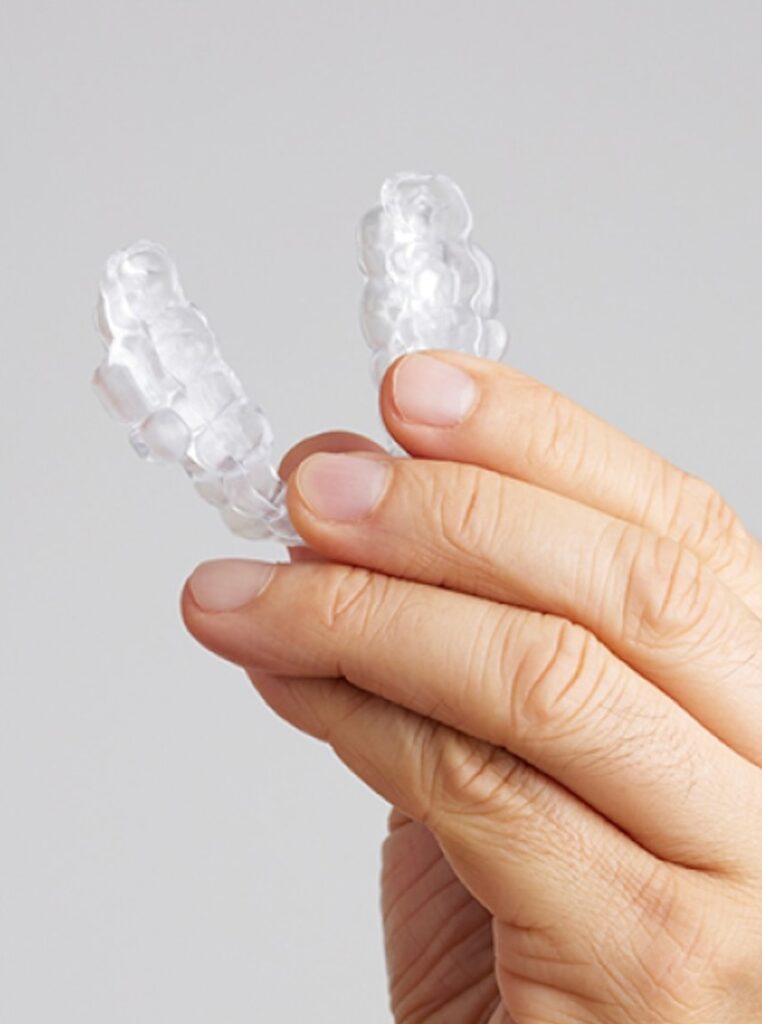
Oral device therapy for obstructive sleep apnea (OSA) is a non-invasive treatment designed to support breathing during sleep by stabilizing the jaw and upper airway. It involves wearing a custom-fit device in your mouth while you sleep to help prevent the airway from narrowing, reducing interrupted breathing.

Google Rating
4.9
A trusted TMJ, Sleep & Airway Doc in Scottsdale, Arizona
How It Works
How Oral Appliance Therapy Works to Keep the Airway Open
When obstructive sleep apnea happens, the upper airway muscles and surrounding soft tissue relax during sleep. The soft palate falls, the tongue may fall backward, and soft tissue collapses — reducing or cutting off the flow of air to the lungs.
Oral appliance therapy works by gently repositioning the lower jaw forward — holding it in a position that keeps the upper airway open. This helps to:
- Keep the airway open throughout the night
- Move the tongue forward and away from the airway
- Maintain airway patency
- Prevent or reduce apnea and hypopnea events
Oral appliance therapy is more effective for many patients with mild OSA (AHI less than 15) — research suggests that the devices result in meaningful reductions in apnea events and improvements in daytime symptoms.
By restoring consistent airflow, oral appliance therapy supports better sleep quality and better health outcomes. For many patients, oral appliance therapy provides an effective treatment alternative to CPAP — improving sleep quality, reducing apnea, and doing so in a way that is quiet, portable, and easy to tolerate.
Device Options
Types of Oral Appliances and Dental Devices Used in Sleep Medicine
Several types of dental appliances are used in oral appliance therapy for sleep apnea to help maintain an open airway and improve sleep quality. The most common include:
Mandibular Advancement Appliance
The most widely used device. Holds the lower jaw (mandible) in a slightly forward position — preventing the tongue and soft tissues from collapsing into the airway. Custom-fitted and titratable for maximum effectiveness.
Mandibular Repositioning Appliance
A variation of the mandibular advancement device — designed to reposition the jaw at a specific angle and height to optimize airway opening based on your unique anatomy and sleep study findings.
Tongue Stabilizing Device
An alternative for patients who cannot wear mandibular advancement devices. Uses gentle suction to hold the tongue in a forward position — preventing it from falling back and obstructing the airway during sleep.
Because oral positioning directly affects the temporomandibular joint, precise titrating is essential. Our approach combines the device with careful bite analysis, TMJ support, and occlusal alignment throughout treatment. Our approach controls with the bite only, airway support and protecting joint health.
Primary Device
The Mandibular Advancement Device
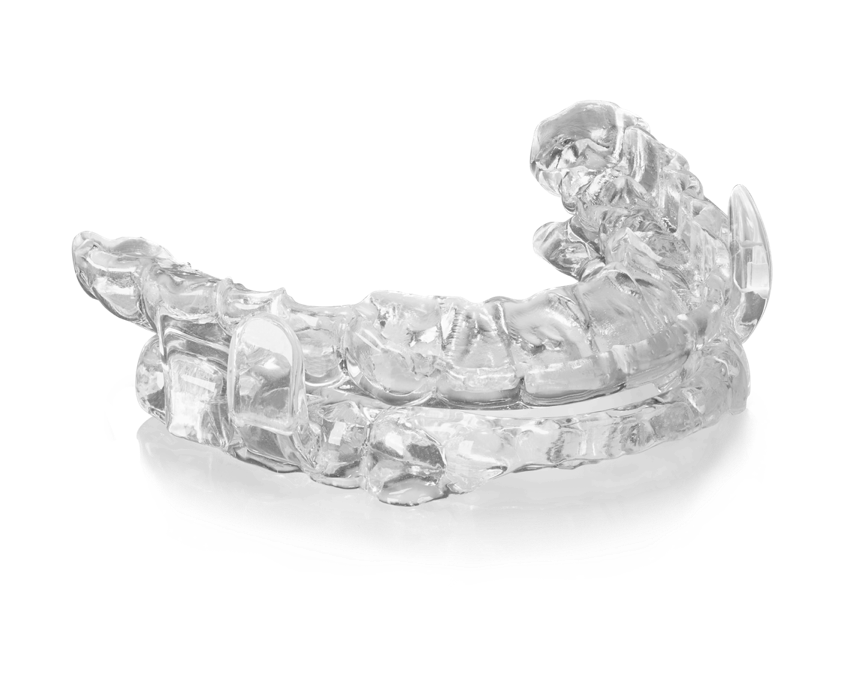
A mandibular advancement device is the most widely used oral appliance for sleep apnea. It works by holding the lower jaw in a fixed forward position during sleep, helping to keep the airway open and reducing sleep-related obstructive breathing events.

There are two primary designs:
- One-piece devices — which hold the jaw in a fixed forward position
- Adjustable two-piece designs — which allow the titration of jaw forward advancement for maximum comfort for individual requirements
Research consistently shows that oral appliances, including mandibular advancement devices, are effective for reducing apnea events in patients with mild to moderate OSA.
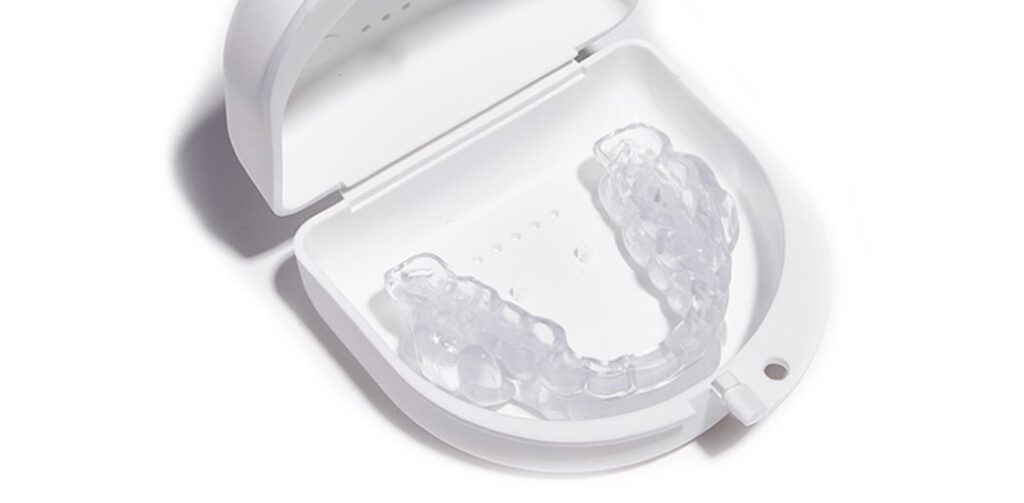
Oral Appliance
Custom, comfortable, and convenient
While considering treatment for sleep apnea, many patients are initially unfamiliar with a CPAP machine. Continuous positive airway pressure, often referred to as CPAP, is a treatment to stabilize air pressure as you sleep, pushing air to keep the sleep airway open during sleep.
Oral appliances are a comfortable sleeping alternative. While CPAP therapy can be very effective, some patients struggle with mask discomfort, difficulty adjusting to air pressure, noise, or a general feeling that the device gets in the way. They are quieter, portable, and easier to tolerate.
CPAP
Effective — when consistently used
CPAP therapy remains a gold standard for moderate to severe obstructive sleep apnea — delivering a continuous flow of pressurized air through a mask to keep the airway open. When properly fitted and consistently used, it is highly effective.
The challenge is compliance. Many patients find the mask uncomfortable, the machine noisy, or the process disruptive enough to stop using it. An oral appliance used consistently will outperform a CPAP machine left on the nightstand.
What to Expect
The Oral Appliance Treatment Process at Winterholler Sleep & TMJ
Every oral appliance treatment at Winterholler follows a structured, personalized approach — because the right device and the right fit make all the difference.
Sleep apnea sleep study evaluation and sleep study review. We confirm the severity of your sleep apnea and identify whether oral appliance therapy is the most appropriate treatment.
We take pictures of your upper teeth and lower jaw. Precise digital records of your bite and anatomy are used to fabricate your custom oral appliance for the most accurate fit possible.
Small adjustments over a few weeks to optimize the device — balancing airway opening with jaw comfort for sustainable, long-term results.
Regular long-term follow-up ensures that the oral appliance continues to fit properly, manage airway support, and adapt with your health over time. This approach maximizes patient long-term outcomes and treatment efficacy — keeping the appliance comfortable and adapted with your anatomy as needed.
Outcomes
Patient Satisfaction and Long-Term Outcomes for a Good Night's Rest
Most patients adjust smoothly, and side effects can occur. These may include temporary jaw discomfort, minor bite changes, or minor temporary headaches. These typically resolve as treatment starts and are manageable with guidance from our team.
The health and wellbeing of sleep apnea patients who start treatment with oral and appliance therapy report that treatment can truly help. Patients experience daytime sleepiness, improve concentration, and enhance overall quality of life. Left untreated, sleep apnea increases the possibility of the high blood pressure, heart disease, and other cardiovascular conditions — oral appliance therapy provides a meaningful and evidence-based path forward.
- Most patients report improved energy and reduced daytime sleepiness within weeks
- Improved concentration, mood, and quality of life with consistent use
- Reduced cardiovascular risk associated with untreated obstructive sleep apnea
- High patient satisfaction compared to CPAP — particularly for comfort and compliance
- Long-term effectiveness confirmed with follow-up sleep testing

Common Questions
Frequently Asked Questions About Oral Appliance Therapy
Is oral appliance therapy effective for moderate obstructive sleep apnea?
How does an oral appliance compare to CPAP?
CPAP delivers a continuous stream of pressurized air through a mask — highly effective when used consistently, but often difficult to tolerate. Oral appliance therapy repositions the lower jaw forward to keep the airway open mechanically — no mask, no hose, no machine noise. Studies show comparable outcomes for mild to moderate OSA. For many patients, better compliance with an oral appliance leads to better real-world results than CPAP left unused on the nightstand.
How long does it take to see results?
Most patients notice improvement within the first few nights of consistent use. Objective improvement in oxygen levels and apnea events is typically confirmed with a follow-up home sleep test within 4–8 weeks of beginning treatment. Titration adjustments along the way ensure the appliance is performing at its optimal position for your anatomy.
Will insurance cover oral appliance treatment?
Many dental and medical insurance plans provide coverage for oral appliance therapy when it is prescribed for the treatment of obstructive sleep apnea. Coverage varies by plan. Our team will work with you to verify your benefits and maximize any applicable insurance reimbursement before treatment begins.
Can oral appliances treat snoring without sleep apnea?
Yes. Custom oral appliances are FDA-approved for the treatment of primary snoring — even without a formal sleep apnea diagnosis. By holding the lower jaw slightly forward and preventing soft tissue collapse, they are highly effective at reducing or eliminating snoring in patients who want a comfortable, simple solution without a CPAP machine.
Start Sleeping Better with Oral Device Therapy
No mask. No machine. Just better sleep.
At Winterholler Sleep and TMJ, we are dedicated to helping patients find their best night’s rest through comfortable, customized oral device therapy — taking the time to understand your sleep history, your anatomy, and your goals so we can build the most effective treatment plan for you. Schedule your complimentary consultation today.
Scottsdale
13825 N Northsight Blvd, Suite 120
Mon–Thu 8–5 · Tue 7–5 · Fri 8–1
(480) 767-8400
Payson
315 E State Highway 260
Mon–Thu 8am – 5pm
(928) 474-2200